Caesars Sportsbook Lawsuit for Gambling Addiction

Key Takeaways

  • Legal investigations examine whether Caesars Sportsbook's platform design, deceptive 'risk-free' promotions, and targeted marketing to college students contributed to gambling addictions while the company failed to implement protective measures across its 22-state operation.

  • Individuals aged 18-30 with minimum $10,000 in losses may qualify to file claims, as research shows 58% of college students aged 18-22 participated in sports betting, with many experiencing financial distress and mental health crises from platform manipulation.

  • Free case evaluations determine eligibility without upfront costs through contingency arrangements, with state filing deadlines ranging 2-6 years from harm discovery, making prompt action vital to preserve legal rights against Caesars Sportsbook's practices.

How to File a Caesars Sportsbook Lawsuit for Gambling Addiction?

Question: How to file a Caesars Sportsbook lawsuit for gambling addiction?

Answer: Legal investigations are examining whether Caesars Sportsbook’s platform design, marketing strategies, and promotional tactics contributed to users developing gambling addictions while failing to implement protective measures.

Unlike traditional betting shops, the betting platform operates across 22 states and Washington, D.C., where regulatory authorities are scrutinizing whether aggressive promotional campaigns and manipulative app features created an environment that fostered dependency among vulnerable users.

On this page, we’ll answer this question in further depth, potential damages in Caesars Sportsbook lawsuits, and much more.

Caesars Sportsbook Lawsuit for Gambling Addiction

Overview of Filing a Caesars Sportsbook Lawsuit

Caesars Sportsbook faces legal investigations alleging the company used gamification features, push notifications, and in-game wagering options to encourage compulsive betting behaviors.

State regulators including the Ohio Casino Control Commission, Arizona, and Nevada have issued warnings to gaming licensees about maintaining suitability standards.

The company maintains university partnerships, including an $8.4 million five-year deal with Michigan State University, providing direct access to student populations who represent high-risk demographics for addiction development.

Research shows that 58% of college students aged 18-22 participated in sports betting in the previous 12 months, with many experiencing financial distress and mental health crises.

Affected individuals report substantial financial losses often exceeding $10,000, destroyed credit, damaged relationships, and severe mental health consequences from compulsive gambling addiction caused by platform manipulation and failure to implement protective safeguards.

If you or a loved one suffered financial losses from gambling addiction after using Caesars Sportsbook, you may be eligible to seek compensation.

Contact TruLaw using the chat on this page to receive an instant case evaluation that can help you determine if you qualify to file a Caesars Sportsbook lawsuit today.

Caesars Sportsbook Gambling Addiction Lawsuit Allegations

Legal proceedings are investigating whether Caesars Sportsbook’s platform design, marketing strategies, and promotional tactics contributed to users developing gambling addictions while the company failed to implement protective measures.

The investigations examine whether the betting platform prioritized engagement and revenue over user welfare by employing features designed to encourage compulsive behavior and exploit psychological vulnerabilities.

As Caesars Sportsbook maintains availability across 22 states and Washington, D.C., regulatory authorities are scrutinizing whether the widespread accessibility combined with aggressive promotional campaigns created an environment that fostered dependency among vulnerable users.

What Legal Claims Are Being Investigated Against Caesars Sportsbook

Multiple jurisdictions are investigating legal claims against Caesars Sportsbook regarding promotional practices that allegedly misled users and failures to implement protective safeguards.

The investigations focus on whether the platform’s operations violated consumer protection standards by creating an environment that encouraged compulsive betting behaviors without adequate intervention mechanisms.
Legal investigations focus on the following claims against Caesars Sportsbook:

  • Risk-free bet promotions that required users to spend their own money before receiving promotional credits, contradicting the “risk-free” marketing language
  • Failure to impose deposit limits or time restrictions by default, allowing users to gamble continuously without mandatory cooling-off periods
  • VIP programs that targeted users who had lost substantial amounts, providing them with additional incentives to continue gambling despite financial harm

State regulators including the Ohio Casino Control Commission, Arizona, and Nevada have issued warnings to gaming licensees about maintaining suitability standards.

These regulatory actions demonstrate growing scrutiny of sports betting platforms’ practices across multiple jurisdictions where Caesars Entertainment, the parent company of Caesars Sportsbook, operates.

The company launched operations in North Carolina on March 11, 2024, expanding its reach into additional markets through partnerships with tribal casinos and state-licensed facilities, further broadening the scope of potential claims.

Manipulative App Design and Marketing Practices

Caesars Sportsbook allegedly employed manipulative app features and marketing campaigns specifically designed to encourage excessive betting behaviors among users.

The platform’s design choices and promotional strategies are being examined for whether they deliberately targeted psychological vulnerabilities that increased addiction risk.
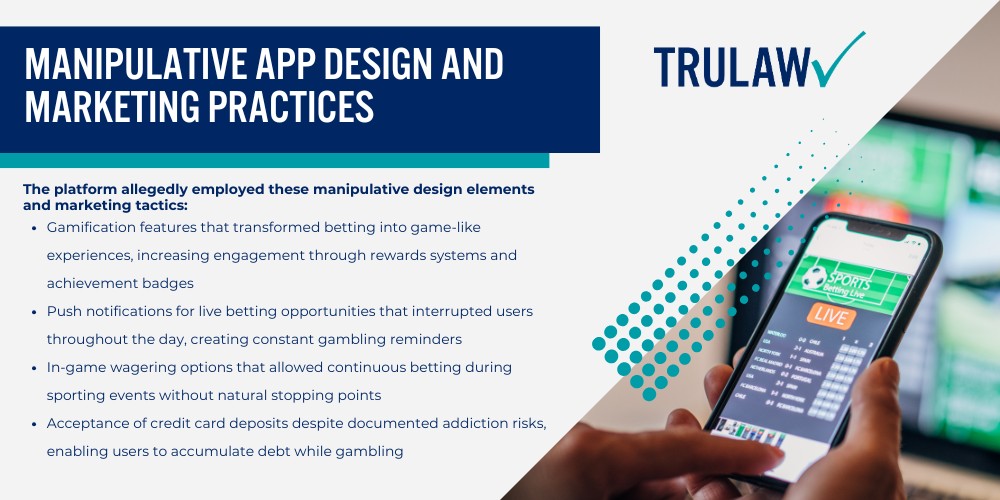
The platform allegedly employed these manipulative design elements and marketing tactics:

  • Gamification features that transformed betting into game-like experiences, increasing engagement through rewards systems and achievement badges
  • Push notifications for live betting opportunities that interrupted users throughout the day, creating constant gambling reminders
  • In-game wagering options that allowed continuous betting during sporting events without natural stopping points
  • Acceptance of credit card deposits despite documented addiction risks, enabling users to accumulate debt while gambling

Sports betting companies’ marketing efforts specifically targeted college students and young adults through social media platforms and university partnerships.

Michigan State University signed a deal worth $8.4 million over five years with the betting agency in 2021, described by negotiators as “the largest sportsbook deal in college athletics.”

Research indicates that 58% of college students aged 18-22 participated in sports betting in the previous 12 months, with approximately 75% of college students having gambled during the past year.

Individuals who developed gambling addictions after using Caesars Sportsbook may be entitled to seek compensation through a sports betting lawsuit.

TruLaw partners with gambling addiction litigation leaders to help affected users explore their legal options for filing a gambling addiction lawsuit.
How Caesars Sportsbook Marketing Allegedly Promotes Gambling Addiction

Aggressive marketing strategies employed by online sports betting apps like Caesars Sportsbook allegedly influence betting behaviors through psychological tactics embedded in promotional campaigns.

These marketing approaches are being examined for whether they deliberately exploit user vulnerabilities through tactics designed to encourage continuous engagement and spending.

With a nearly $270 million budget documented by the American Gaming Association, sports betting agencies maintain extensive resources for reaching young, impressionable audiences through coordinated advertising campaigns across multiple platforms and partnerships.

Deceptive Bonus Offers and Promotional Tactics

Promotional offers marketed as “free bets” and “risk-free” wagering opportunities allegedly require substantial deposits and contain hidden wagering requirements that create ongoing gambling incentives.

These promotional structures are designed to encourage initial engagement while obscuring the true financial commitments and risks involved in redeeming advertised benefits.

Investigators are examining these deceptive promotional structures:

  • Limited-time bonus offers and deposit match promotions that create artificial urgency, pressuring users to make impulsive betting decisions before promotions expire
  • Deposit match bonuses requiring extreme rollover requirements hidden in fine print, often demanding users to wager the bonus amount multiple times before withdrawal
  • Terms and conditions deliberately obscured in lengthy disclosures, making it difficult for users to comprehend actual costs and obligations

These promotional structures encourage impulsive betting patterns and sustained platform engagement while masking the true costs and addiction risks to users.

Caesars consistently offers “First Bet Back Up to $1,059” promotions across multiple state markets, with typical structures requiring new customer registration and bonus bets often expiring within 7-14 days of receipt.

Industry-standard wagering requirements typically range from 1x to 20x the bonus amount before users can withdraw any winnings, creating cycles of continued betting to access funds.

Targeted Marketing to Vulnerable User Groups

Social media advertising campaigns on platforms including TikTok, Instagram, and Snapchat specifically target young adults and college-age users who represent the highest-risk demographic for developing gambling disorders.

These coordinated marketing efforts reach vulnerable populations during formative developmental years when susceptibility to addiction is elevated.

Marketing campaigns deployed several methods to reach vulnerable users:

  • University partnerships providing platforms with direct campus access to student populations, including sponsorship deals worth millions of dollars
  • Celebrity endorsements and athlete partnerships that normalize frequent betting behaviors among impressionable audiences
  • Sports event sponsorships creating constant gambling exposure during programming watched by young adults and college students

These coordinated marketing efforts specifically reach demographically vulnerable populations during periods when addiction susceptibility is highest.

A 2023 NCAA survey found that nearly 60 percent of 18- to 22-year-olds had participated in sports betting, with some experiencing financial distress, academic struggles, and mental health crises as a result.

Michigan State University, University of Colorado, and University of Denver maintain partnerships with Caesars, facilitating access to student populations.

If you experienced financial hardship after being targeted by Caesars Sportsbook’s marketing campaigns, you may qualify for legal action against predatory gambling practices.

Contact TruLaw to evaluate whether you qualify to file an online gambling addiction lawsuit today.

Recognizing Warning Signs of Sports Betting Addiction

Identifying when casual sports betting becomes gambling addiction requires attention to specific behavioral and psychological indicators that worsen without intervention.

Gambling disorder is a recognized mental health condition with documented diagnostic criteria and measurable progression patterns.

In the fifth edition of the Diagnostic and Statistical Manual of Mental Disorders (DSM-5), pathological gambling was renamed “gambling disorder” and moved to the Substance-Related and Addiction Disorders chapter, establishing it as a legitimate addiction comparable to substance use disorders.

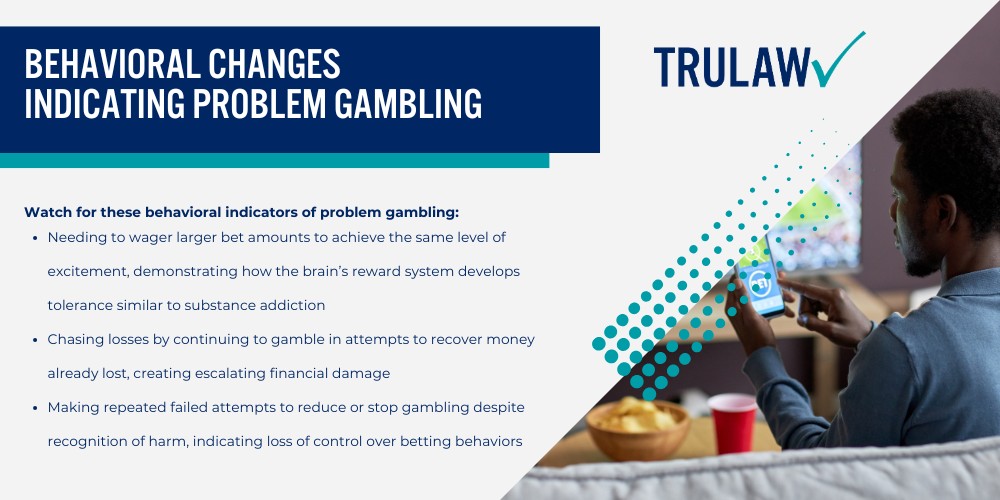
Behavioral Changes Indicating Problem Gambling

Preoccupation with betting activities, constant thoughts about gambling, and difficulty controlling betting impulses represent primary behavioral indicators of developing addiction.

These symptoms manifest through observable changes in daily routines, decision-making patterns, and relationship priorities as gambling increasingly dominates thoughts and actions.

Watch for these behavioral indicators of problem gambling:

  • Needing to wager larger bet amounts to achieve the same level of excitement, demonstrating how the brain’s reward system develops tolerance similar to substance addiction
  • Chasing losses by continuing to gamble in attempts to recover money already lost, creating escalating financial damage
  • Making repeated failed attempts to reduce or stop gambling despite recognition of harm, indicating loss of control over betting behaviors

What begins as casual betting intensifies over time as addiction progresses, with each cycle reinforcing compulsive patterns that become increasingly difficult to interrupt.

Early intervention can prevent more severe addiction development and limit financial and emotional damage.

Research estimates that 0.4-1.6% of the U.S. population suffers from pathological gambling, while approximately 75% of college students gambled during the past year with about 18% gambling weekly or more frequently.

Student gambling has reached concerning levels, with 6% of college students affected by serious gambling problems – rates 3-5 times higher than the general adult population.

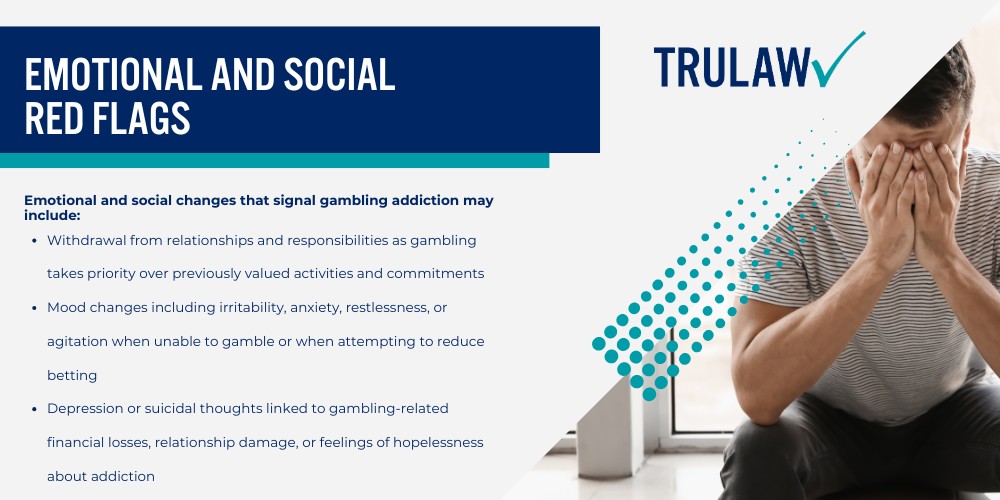
Emotional and Social Red Flags

Lying to family members or friends about gambling activities and financial losses represents a common emotional warning sign that addiction has developed.

These deceptive behaviors typically emerge as individuals attempt to conceal the extent of their gambling involvement while continuing to engage in betting despite negative consequences.

Emotional and social changes that signal gambling addiction may include:

  • Withdrawal from relationships and responsibilities as gambling takes priority over previously valued activities and commitments
  • Mood changes including irritability, anxiety, restlessness, or agitation when unable to gamble or when attempting to reduce betting
  • Depression or suicidal thoughts linked to gambling-related financial losses, relationship damage, or feelings of hopelessness about addiction

These emotional symptoms often mask the addiction’s severity, allowing problems to escalate before loved ones recognize the full extent of harm.

Recognizing emotional warning signs early facilitates intervention before financial or relationship damage becomes irreversible.

Research from different countries has shown that among people receiving treatment for problem gambling, between 22% and 81% of recovering sports bettors reported thoughts about suicide (and 7% to 30% have made an attempt).

Gamblers with disorder are 15 times more likely to attempt suicide than the general population.

Recognizing these warning signs is the first step toward seeking help and exploring your legal options.

TruLaw assists individuals whose gambling addictions were exacerbated by platforms like Caesars Sportsbook through gambling addiction lawsuits that hold companies accountable.

Financial and Emotional Impact of Online Sports Betting Addiction

Gambling addiction creates devastating consequences for users’ financial stability, relationships, and mental health through patterns of compulsive behavior that accelerate harm.

Like online casino games, gambling apps’ 24/7 accessibility and rapid betting options intensify financial losses and emotional distress by eliminating natural barriers that previously limited gambling frequency and amounts.

One study estimated that more than 60 percent of those surveyed lost, on average, more than seven hours of work per month, with the average gambler costing employers more than $1,300 monthly through reduced productivity and workplace performance issues.

Financial Devastation and Debt Accumulation

Thousands or millions of dollars can be lost through continuous mobile sports betting fueled by promotional incentives, with rapid platforms accelerating the pace of financial destruction.

Unlike slot machines with natural pauses, the ease of placing multiple bets throughout the day removes traditional friction points that previously slowed gambling behaviors, allowing losses to accumulate at unprecedented rates.

Problem gambling creates these financial burdens:

  • Credit card debt from cash advances used to continue gambling after losing money, with 90% of gambling addicts using credit card cash advances to support their betting activities
  • Depleted savings accounts and borrowed money from family members or employers to cover losses or continue gambling
  • Bankruptcy filings resulting from unsustainable gambling-related debt, with 20-28% of problem gamblers filing for bankruptcy

Job loss resulting from gambling-related productivity declines and inability to pay basic living expenses leads to housing instability and poverty.

The National Council on Problem Gambling reports that the average debt generated by a male gambling addict ranges between $55,000 and $90,000, while female gamblers average $15,000 in debt.

An estimated 23 million Americans carry gambling-related debt that drains their bank accounts, while one-quarter to one-third of problem gamblers ultimately lose their jobs due to gambling impacts.

Mental Health Crises and Relationship Damage

Depression, anxiety disorders, and increased suicide risk represent mental health harms that develop as direct consequences of uncontrolled betting behaviors and their resulting life disruptions.

The psychological toll of financial losses, deception, and loss of control creates a cascade of mental health problems that compound over time.

The psychological and relational toll manifests through:

  • Broken marriages and romantic relationships, with pathological gamblers experiencing 39.5-53.5% lifetime divorce rates compared to 18.2% in the general population
  • Strained family relationships characterized by destroyed trust, with 23% of pathological gamblers’ spouses experiencing physical or verbal abuse
  • Isolation from support systems and deteriorating overall wellbeing, as 96% of problem gamblers meet criteria for another mental illness

Gambling addiction’s invisible nature compared to substance abuse allows problems to escalate undetected until relationships and mental health are severely damaged.

A Swedish study reported a standardised mortality ratio of 15.1 for suicide among a cohort of more than 2,000 people with diagnosed gambling disorder compared with the general population, demonstrating the severe mental health risks associated with this condition.

The severe financial and emotional toll of gambling addiction may be grounds for legal compensation, especially when platforms deliberately designed features that fostered dependency.

TruLaw evaluates cases involving substantial losses tied to sports betting apps through online gambling addiction lawsuits.

Legal Claims in Caesars Sportsbook Gambling Addiction Lawsuits

Specific legal theories are being pursued against Caesars Sportsbook through potential class action lawsuit proceedings, including violations of consumer protection laws, negligence, and product liability aimed at holding platforms accountable for designing addictive systems.

These legal frameworks provide pathways for affected individuals to seek compensation for harms suffered through allegedly manipulative platform designs and marketing practices.

Licensing authorities, such as the New Jersey Division of Gaming Enforcement, Nevada Gaming Control Board, and Pennsylvania Gaming Control Board, regulate Caesars to ensure compliance and fairness, establishing the regulatory framework within which legal accountability can be pursued.

Consumer Protection and Deceptive Trade Practice Violations

State consumer protection law violations are being investigated through allegations of misleading advertising regarding risk-free bets and failures to disclose true financial risks to users.

These deceptive practices allegedly induced users to engage in betting activities under false pretenses about the actual costs, terms, and potential losses involved.

Consumer protection investigations center on these alleged violations:

  • Unfair and deceptive practices in promotional marketing that misrepresented the true nature of betting offers and requirements
  • Failure to clearly communicate betting terms and conditions, obscuring material information in lengthy disclosures and fine print
  • Misrepresentation of odds and winning probabilities designed to encourage continued betting by creating unrealistic expectations of success

Regulatory actions by state gaming commissions and attorneys general demonstrate patterns of consumer protection violations warranting legal remedies.

The Ohio Casino Control Commission sent out letters to gaming license holders in August 2024 stating their “continued suitability [as] a sports gaming licensee” would be questioned if they delved into certain market activities.

Arizona and Nevada sent similar regulatory warnings to licensees, demonstrating multi-state scrutiny of gambling platform practices.

State gaming commissions including New Jersey, Nevada, and Pennsylvania maintain active oversight to distinguish licensed operations from illegal sports betting, while Missouri’s Gaming Commission is finalizing regulations allowing up to 13 online sportsbooks.

Product Liability and Negligence Claims

Allegations assert that betting apps were defectively designed to exploit addictive behaviors without adequate safeguards or responsible gambling features.

These design choices allegedly prioritized user engagement and revenue generation over consumer welfare, creating unreasonably dangerous products for vulnerable populations.

Product liability claims address the following platform failures:

  • Failure to implement mandatory deposit limits or cooling-off periods despite knowledge of addiction risks and industry best practices
  • Continued promotional targeting of users showing addiction signs, including increased betting frequency and escalating losses
  • Inadequate warnings about gambling disorder risks and failure to provide accessible resources for addiction intervention

Duty of care standards for digital platforms establish legal obligations to protect vulnerable users from foreseeable harms.

Gambling disorder carries severe risks as a behavioral condition associated with depression, substance abuse, domestic violence, bankruptcy, and high suicide rates.

The DSM-5 recognizes gambling disorder in the Substance-Related and Addiction Disorders chapter, establishing medical and scientific consensus that platforms should reasonably anticipate and address addiction risks through responsible design practices.

These legal claims provide pathways for affected individuals to seek accountability and compensation for gambling-related harm.

TruLaw partners with gambling addiction litigation experts to build strong online gambling addiction lawsuit cases based on these legal theories.

Seeking Legal Help for Caesars Sportsbook Gambling Addiction

Individuals who believe they have grounds for legal action against Caesars Sportsbook should understand the case evaluation process and eligibility criteria for pursuing compensation.

Taking legal action involves gathering documentation of gambling activities, financial losses, and evidence of addiction development to establish claims against the platform.

Since the 2018 Supreme Court ruling that legalized sports betting in many states, advertisements for gambling platforms have surged, creating the legal framework and timeline context for pursuing litigation against platforms whose practices allegedly contributed to user harm.

Eligibility Criteria for Gambling Addiction Lawsuits

Typical eligibility requirements for gambling addiction lawsuits include age during gambling activity and minimum financial loss thresholds that demonstrate substantial harm.

These criteria help establish that platforms’ practices caused measurable damages warranting legal remedies and compensation.

To qualify for legal action, individuals must meet these criteria:

  • Being 18-30 years old when gambling occurred, representing the demographic most vulnerable to developing gambling disorders through platform use
  • Demonstrating minimum financial losses of $10,000 or more, establishing substantial economic harm requiring legal redress
  • Providing evidence of gambling addiction or compulsive betting behaviors developed through platform use, including medical records or testimony documenting addiction progression

Documentation needed to support claims includes account records showing betting history and promotional communications received, financial statements demonstrating losses and debt accumulation, and evidence of the platform’s promotional targeting or failure to implement protective measures.

Young adults aged 18-30 represent the highest-risk demographic among online sports bettors for gambling disorder development, with research showing elevated vulnerability during these formative years.

One study showed that problem gamblers estimated losing a median of $16,750 per year, establishing typical loss amounts that meet litigation thresholds.

Average losses vary significantly, with California gambling hotline callers averaging $46,000 annually in 2020.

Taking Action and Getting Your Case Evaluated

A free case review determines if circumstances meet legal criteria without upfront costs through contingency fee arrangements that align attorney compensation with case outcomes.

This arrangement removes financial barriers that might otherwise prevent affected individuals from pursuing legitimate claims against well-resourced gambling platforms.

Begin your legal evaluation by completing these steps:

  • Submitting case details for review through TruLaw’s instant evaluation system to determine preliminary eligibility
  • Providing documentation of gambling losses and platform interactions, including account statements and promotional materials received
  • Working with specialized gambling addiction attorneys to build claims based on platform design defects, deceptive marketing, and failure to implement safeguards

Timelines for filing claims vary by state, with statutes of limitations generally ranging 2-6 years from discovery of harm or from when platform use ended.

Acting promptly preserves legal rights and avoids missing filing deadlines that could bar claims entirely.

Contingency fee arrangements typically involve no upfront costs, with attorneys receiving a percentage of recovery only if successful.

Since 2018, over 30 U.S. states have approved sports betting, with some authorizing retail locations and others permitting both retail sites and online platforms, expanding the jurisdictional landscape for potential litigation.

Taking legal action can help you recover losses and hold gambling companies accountable for their predatory practices.

TruLaw provides instant case evaluations to determine your eligibility for compensation through an online gambling addiction lawsuit.
How Can An Online Gambling Addiction Attorney from TruLaw Help You?

Our Online Gambling Addiction attorney at TruLaw is dedicated to supporting clients through the process of filing an Online Gambling Addiction lawsuit.

With extensive experience in product liability cases, Jessica Paluch-Hoerman and our partner law firms work with litigation leaders and addiction specialists to prove how online gambling platforms with manipulative features caused you harm.

TruLaw focuses on securing compensation for financial losses, mental health treatment expenses, addiction therapy costs, and other damages resulting from online sports gambling addiction injuries.

We understand the financial and psychological toll that Online Gambling Addiction has on your life and provide the personalized guidance you need when seeking justice.

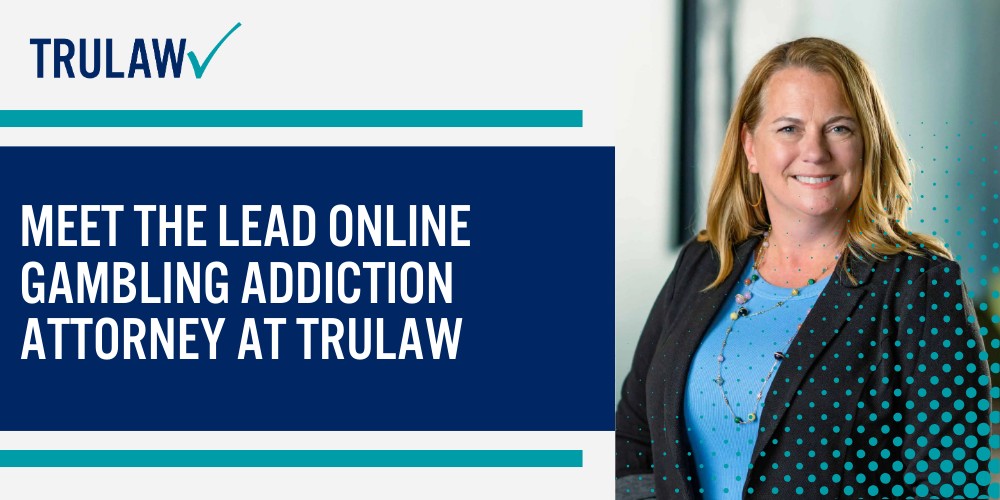
Meet the Lead Online Betting Addiction Attorney at TruLaw

Meet our lead Online Gambling Addiction attorney:

  • Jessica Paluch-Hoerman: As founder and managing attorney of TruLaw, Jessica brings her experience in product liability and personal injury to her client-centered approach by prioritizing open communication and personalized attention with her clients. Through TruLaw and partner law firms, Jessica has helped collect over $3 billion on behalf of injured individuals across all 50 states through verdicts and negotiated settlements.

How much does hiring an Online Gambling Addiction lawyer from TruLaw cost?

At TruLaw, we believe financial concerns should never stand in the way of justice.

That’s why we operate on a contingency fee basis – with this approach, you only pay legal fees after you’ve been awarded compensation for your injuries.

If you or a loved one experienced gambling addiction, financial devastation, depression, anxiety, or other harm from online gambling platforms designed with addictive features, you may be eligible to seek compensation.

Contact TruLaw using the chat on this page to receive an instant case evaluation and determine whether you qualify to join others in filing an Online Gambling Addiction lawsuit today.

TruLaw: Accepting Clients for the Online Gambling Addiction Lawsuit

Online gambling addiction lawsuits are being filed by individuals and families across the country who suffered financial ruin and mental health problems from gambling platforms designed with deliberately addictive mechanisms and insufficient safeguards.

TruLaw is currently accepting clients for the Online Gambling Addiction lawsuit.

A few reasons to choose TruLaw for your Online Gambling Addiction lawsuit include:

  • If We Don’t Win, You Don’t Pay: The Online Gambling Addiction lawyers at TruLaw and our partner firms operate on a contingency fee basis, meaning we only get paid if you win.
  • Expertise: We have decades of experience handling product liability cases similar to the Online Gambling Addiction lawsuit.
  • Successful Track Record: TruLaw and our partner law firms have helped our clients recover billions of dollars in compensation through verdicts and negotiated settlements.

If you or a loved one suffered gambling addiction, severe financial losses, or mental health problems from online gambling platforms, you may be eligible to seek compensation.

Contact TruLaw using the chat on this page to receive an instant case evaluation that can determine if you qualify for the Online Gambling Addiction lawsuit today.

Frequently Asked Questions

  • Legal investigations examine whether Caesars Sportsbook’s platform design and marketing practices contributed to gambling addictions while failing to implement adequate protective measures.

    Focus areas include misleading “risk-free” bet promotions requiring users to spend their own money, targeted marketing campaigns aimed at vulnerable populations including college students, and the failure to implement meaningful safeguards.

    Claims address whether Caesars failed to impose deposit limits or time restrictions by default, allowing continuous gambling without mandatory cooling-off periods.

Published by:
Share
Picture of Jessica Paluch-Hoerman
Jessica Paluch-Hoerman

Attorney Jessica Paluch-Hoerman, founder of TruLaw, has over 28 years of experience as a personal injury and mass tort attorney, and previously worked as an international tax attorney at Deloitte. Jessie collaborates with attorneys nationwide — enabling her to share reliable, up-to-date legal information with our readers.

This article has been written and reviewed for legal accuracy and clarity by the team of writers and legal experts at TruLaw and is as accurate as possible. This content should not be taken as legal advice from an attorney. If you would like to learn more about our owner and experienced injury lawyer, Jessie Paluch, you can do so here.

TruLaw does everything possible to make sure the information in this article is up to date and accurate. If you need specific legal advice about your case, contact us by using the chat on the bottom of this page. This article should not be taken as advice from an attorney.

Additional Online Gambling Addiction Lawsuit resources on our website:
All
FAQs
Injuries & Conditions
Legal Help
Military
Other Resources
Settlements & Compensation
You can learn more about this topic by visiting any of our Online Gambling Addiction Lawsuit pages listed below:
Bet365 Lawsuit for Gambling Addiction
BetMGM Lawsuit for Gambling Addiction
Caesars Sportsbook Lawsuit for Gambling Addiction
Do I Qualify for a Gambling Addiction Lawsuit?
DraftKings Lawsuit for Gambling Addiction
Fanatics Sportsbook Lawsuit for Gambling Addiction
FanDuel Lawsuit for Gambling Addiction
Gambling Addiction Lawsuit Settlement Amounts
How to Hire A Gambling Lawyer for Gambling Addiction Claims
Online Gambling Addiction Lawsuit
Sports Betting Lawsuit for Gambling Addiction

Other Online Gambling Addiction Lawsuit Resources

All
FAQs
Injuries & Conditions
Legal Help
Military
Other Resources
Settlements & Compensation